As an Amazon Associate, we earn from qualifying purchases. Some links on this site are affiliate links at no extra cost to you. Our recommendations are based on thorough research and editorial judgment.
How Do Monofins Help Swimmers Develop Dolphin Kick Technique?

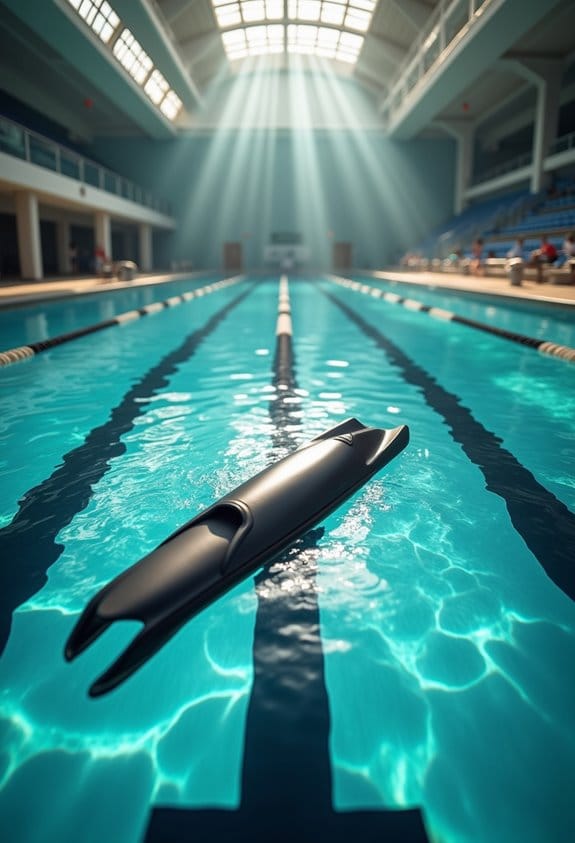
Monofins are game-changers for swimmers aiming to perfect their dolphin kick. They offer resistance that targets glutes, hamstrings, and quadriceps, helping build strength and endurance. The right technique includes a knee bend of 60-70 degrees, paired with hip flexion, ensuring efficient propulsion. Plus, they help swimmers maintain a streamlined position, reducing drag. Using monofins can be as enlightening as a light bulb moment during practice, revealing areas for improvement. Discover more techniques that can skyrocket performance!
Key Takeaways
- Monofins require proper kick timing and wave mechanics, essential for effective dolphin propulsion.
- They enhance hip flexion and knee bend, improving the upward kick’s efficiency.
- Consistent use promotes rhythmic body motion, flowing from the chest down to the feet.
- Monofins help achieve streamlined body positioning, reducing drag during kicks.
- Training with monofins develops muscle endurance and strengthens core stability, enhancing overall kick technique.
Enhancing Physical Strength and Endurance
Enhancing physical strength and endurance is crucial for anyone looking to excel in aquatic sports, and using a monofin can greatly boost these attributes. The large surface area of a monofin creates significant water resistance, leading to intense muscle conditioning. As swimmers kick, the glutes, hamstrings, and quadriceps must exert more force, resulting in powerful dolphin kicks. Regular use builds endurance through low-impact resistance exercise, promoting higher kicking velocity. Additionally, engaging the core muscles during monofin workouts fosters improved swimming posture and reduces fatigue. This combination of muscle conditioning and endurance training can transform a swimmer from a floundering fish to an underwater rocket. Think of it as lifting weights while enjoying a revitalizing swim—both fun and beneficial! Using quality gear like contour swim paddles can complement monofin training by enhancing upper body strength. The enhanced full-body undulation achieved through monofin usage further refines kicking technique, contributing to a smoother swimming experience.
Recommended Products

Mermaid fin come with an exclusive mermaid fin bag, stylish and portable, easy to store and carry around.

Adult Monofin: Enhance your butterfly kick with the FINIS Shooter monofin's short, stiff fiberglass blade; it's perfect for underwater drills and conditioning

Four sizes are available,: S, M, L, XL
Refining Dolphin Kick Technique

Mastering the dolphin kick technique can transform an average swimmer into a powerful force in the water, akin to a sleek submarine gliding effortlessly beneath the surface. Proper kick timing and wave mechanics are essential here; propulsion stems from an aggressive downward kick with the feet pointed backward, ensuring maximum pressure. Swimmers must maintain a slight knee bend—around 60-70 degrees—for ideal performance, while a hip flexion of 20-30 degrees enhances the upward kick. This rhythmic motion should flow from the chest down to the feet, promoting a smooth, undulating movement. Moreover, incorporating hand motions into the kick synchronizes propulsion, reducing velocity loss. Ultimately, refining these techniques fosters speed and efficiency, making every swim feel like effortless gliding through water. Additionally, maintaining a stable platform is critical to ensure that the upper body provides a solid foundation for the undulating motion of the kick. Using adjustable swim fins during training can also help swimmers enhance their kick strength and technique by providing added propulsion and resistance.
Recommended Products

Vented Design: Decreases drag on the upstroke and enhances thrust on the downstroke, helping you go farther faster

Blade’s central panel membrane auto-adjusts the angle of attack based on kicking strength, providing easier kicking when cruising and maximum power when needed.

The fin’s unique articulated design enables the wing-shaped blade to pivot and generate thrust, helping you rocket through the water at top speed or ease in and out of tight spots.
Promoting Optimal Body Position in Water

While many swimmers may underestimate the role of body position in achieving an efficient and effective swim, a streamlined horizontal alignment can greatly enhance performance. Monofins encourage this alignment by promoting a flat posture, reducing drag from sinking hips. When the head, spine, and hips align horizontally, swimmers experience better streamline efficiency. The resistance offered by monofins cultivates core stability, allowing athletes to maintain an effective body line underwater. This stability minimizes unnecessary vertical movement during dolphin kicks, ensuring every muscle is engaged. Additionally, consistent monofin training builds muscle endurance in the core and lower back—essential for preventing wavering. Using ergonomically designed swim aids like monofins alongside other training equipment can accelerate skill development. Ultimately, mastering body alignment with a monofin is like finding the sweet spot on a bicycle—everything just flows! The rhythmic kick of a monofin simulates dolphin movement, further enhancing the swimmer’s technique.
Recommended Products

Adult Monofin: Enhance your butterfly kick with the FINIS Shooter monofin's short, stiff fiberglass blade; it's perfect for underwater drills and conditioning

Four sizes are available,: S, M, L, XL

FINIS Monofin: This swim fin teaches Full Body Motion for a powerful and undulating dolphin kick through the water
Improving Flexibility and Range of Motion

Improving flexibility and range of motion is essential for swimmers seeking to master the dolphin kick technique using a monofin. The design of monofins enhances ankle flexibility by promoting greater dorsiflexion and plantarflexion. This increased range of motion is crucial, allowing feet to move fluidly, much like a well-oiled hinge. Additionally, the undulating motion required in monofin kicking demands substantial hip mobility. Tight hips can be as stubborn as a cat refusing a bath, but consistent use of a monofin helps loosen those joints, strengthening hip flexors and extensors. Using hydrodynamic swim caps during training can further improve efficiency by reducing drag, complementing the enhanced propulsion from improved flexibility. Ultimately, improved flexibility in both the ankles and hips facilitates smoother underwater propulsion, making swimmers glide through water with the grace and power of a dolphin, or at least a well-fed goldfish. The monofin’s construction with graded flexibility further allows swimmers to adapt their kicking technique for optimal performance.
Recommended Products

Adult Monofin: Enhance your butterfly kick with the FINIS Shooter monofin's short, stiff fiberglass blade; it's perfect for underwater drills and conditioning

Swimming Fins for Men and Women: These FINIS swim fins are the perfect swimming accessory for improving your technique and building strength and endurance
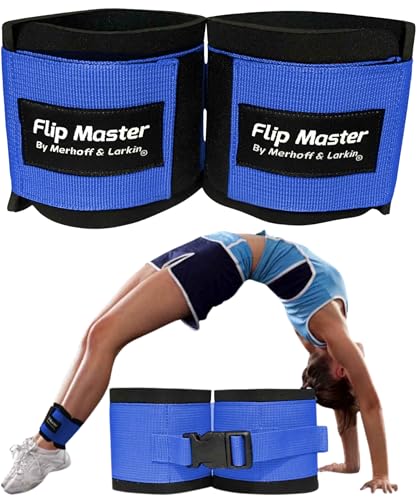
CORRECT THAT FORM - For Muscle Memory & Form Correction. These straps should aid in your training and aren't meant to create the strength required, but rather focus on the muscle memory of performing the exercise correctly with the legs together. Users of these accessories should already have the strength & flexibility required to practice the exercise.
Supporting Injury Prevention Strategies

Prioritizing injury prevention is key for monofin enthusiasts enthusiastic to harness the power of the dolphin kick without the sting of potential setbacks. Implementing safety measures is essential; swimmers should never use a monofin without adult supervision and always train with a buddy. Novices might find it wise to gradually shift from soft fins to monofins, allowing muscle development and injury awareness to flourish. To protect against blisters, neoprene slippers can be a game-changer, reducing friction like a superhero cape shields from danger. Adequately evaluating technique through side swimming can avoid costly mistakes. Additionally, using fins with a closed heel design can help prevent hyperflexion injuries during training. Ultimately, understanding these strategies helps swimmers plunge into their training with confidence and joy while dodging the unfortunate pitfalls of injury. Additionally, especially for international users, understanding that customs or import fees may apply is crucial before ordering equipment, ensuring an injury-free experience.
Encouraging Low-Impact Training Adaptability

For swimmers enthusiastic to tap into the benefits of monofin training, embracing low-impact adaptability is essential to enhance performance without compromising joint health. Monofins serve as a versatile tool, providing dynamic training opportunities for swimmers at all levels. Using equipment with adjustable straps and ergonomic designs similar to top swim goggles can help ensure comfort during prolonged practice. By incorporating personalized workouts, athletes can focus on specific skills like endurance and core stability. The reduced impact on joints allows for intense sessions without the usual wear and tear experienced with other training methods. Think of monofins as the equivalent of a comfy couch that still gives you an invigorating workout. With regular use, swimmers not only improve their dolphin kick technique but also strengthen their body, promoting balanced strength and opening doors to enhanced swimming efficiency and enjoyment in the water.
Facilitating Skill Transfer to Competitive Swimming

As swimmers become increasingly comfortable with monofin training, they often find themselves pondering how to apply their newfound skills in competitive settings. The shift from monofin use to competitive swimming hinges on effective skill acquisition and neural adaptation. With repeated use, swimmers develop stronger motor neuron patterns, allowing them to replicate the dolphin kick efficiently even when unencumbered by the monofin. This accelerated skill transfer enhances underwater dolphin kick performance, unifying leg movements for peak coordination. Additionally, improved timing and rhythm help swimmers master the rhythmic dance of racing. To put it humorously, it’s like training in slow motion yet sprinting in competition—all while engaging muscles like glutes and hamstrings that your future self will thank you for! Moreover, the effectiveness of the underwater dolphin kick is crucial in short course events, further emphasizing the need for skill mastery gained from monofin training. Using training aids such as kickboards can complement monofin work by strengthening leg muscles and improving kicking technique, which supports overall swim performance.
Building Confidence for Underwater Racing

Building confidence for underwater racing often feels like mastering a new language; the words may be familiar, but speaking fluently takes practice. Monofins serve as excellent training tools, enhancing muscle strength and core engagement crucial for swimmers. This confidence building occurs through race simulations that mimic competitive environments, allowing athletes to experience high speeds and effective propulsion. The monofin’s design encourages symmetrical kicking, fostering an efficient dolphin kick while spotlighting any areas needing improvement. Additionally, using lightweight aquatic gear can complement monofin training by reducing drag and improving comfort during practice. Regular use not only refines technique through repetitive practice but also enhances overall fitness, establishing a solid foundation for racing. Ultimately, as swimmers glide faster with consistent monofin sessions, they build the psychological edge essential for success in competitive underwater racing. More power gained from using a monofin leads to higher levels of propulsion during practice, significantly boosting training outcomes.
Maximizing Propulsion and Performance

Maximizing propulsion and performance in underwater racing is like fine-tuning an engine for peak speed. Swimmers harness monofins to achieve remarkable propulsion efficiency through coordinated fin and body movements. By mimicking tuna-like undulation, swimmers use the flexible monofin to store and release energy effectively during the kick. This design minimizes energy loss, optimizing water flow and reducing drag dramatically. Furthermore, this unique single blade design promotes equal down and up kicks, further enhancing kicking technique.
Proper knee flexion and controlled hip movement streamline the swimmer’s profile, enhancing energy conservation. Monofins also engage core muscles deeply, leading to improved overall speed across various strokes. Incorporating short training fins in complementary drills can further develop leg strength and kick speed, amplifying the benefits of monofin training. With training, the synergy of flexibility and technique transforms each dolphin kick into a powerful surge, ensuring every ounce of effort propels the swimmer forward. It’s like riding a wave of efficiency!
Recommended Products
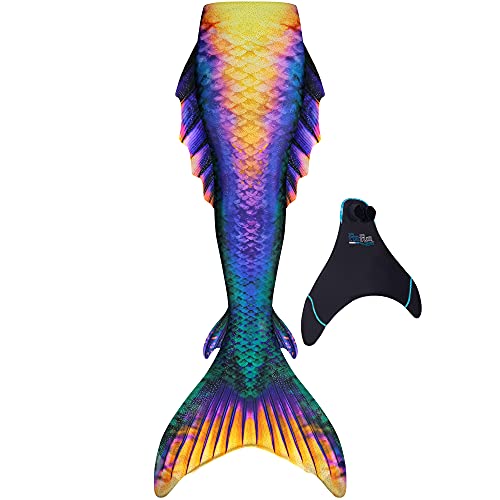
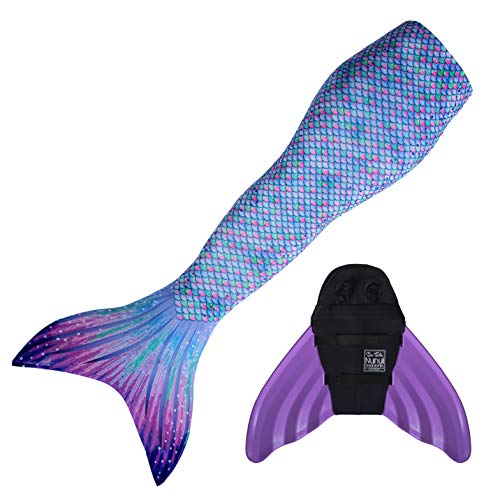
FIN FUN IN THE SUN: Bring your mermaid and merman dreams to life with our swimmable mermaid tails featuring intricate 3D side and back fins. With a wide range of designs and an included monofin, you can glide through the water with comfort and style.
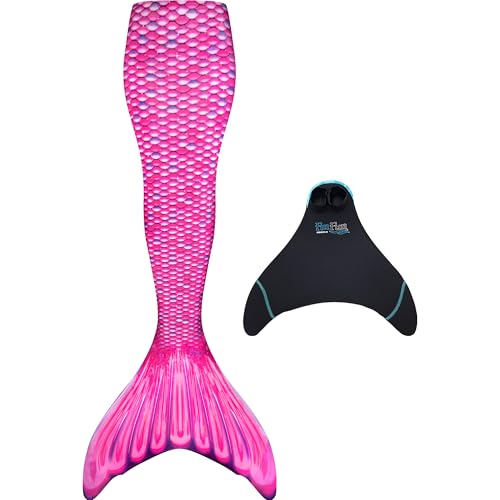
MERMAID TAIL: Featuring vibrant and realistic designs that creates a realistic mermaid look at the pool or at home, our Mermaiden line showcases 9 beautiful fade-resistant colors!
Frequently Asked Questions
Can Monofins Be Used for All Swimming Levels?
Monofins can indeed be used for all swimming levels. They offer benefits to beginners by fostering fundamental skills and rhythm, while also aiding advanced swimmers in developing techniques for strength and speed in their dolphin kick.
How Often Should Swimmers Practice With a Monofin?
Swimmers should practice with a monofin 3-5 times weekly, incorporating structured training sessions that balance drills and recovery. Frequency recommendations emphasize gradual intensity adjustment to optimize performance while preventing fatigue and ensuring effective skill development.
Are There Specific Drills for Using a Monofin?
Are there monofin drills that can enhance fin techniques? Indeed, swimmers can practice streamline drills, side kicking, undulation practice, and back kick techniques to refine their dolphin kick and improve overall swimming efficiency.
What Age Is Appropriate to Start Using a Monofin?
Swimmers can typically start using a monofin once they possess basic swimming skills, focusing on safety. Age requirements vary, but guidance from coaches is recommended to guarantee proper technique and prevent injury during training.
How Do Monofins Differ From Traditional Swim Fins?
Monofins differ considerably from traditional swim fins in design, as they feature a single blade for both feet. This design enhances propulsion efficiency compared to bifins, ensuring faster movement and greater thrust during aquatic activities.


