As an Amazon Associate, we earn from qualifying purchases. Some links on this site are affiliate links at no extra cost to you. Our recommendations are based on thorough research and editorial judgment.


How Do Fins Help Swimmers Build Leg Strength and Endurance?

Fins boost leg strength and endurance by activating muscles more efficiently. With a foot surface area increase of up to 300%, swimmers displace more water, promoting a streamlined kick. This amplifies resistance training, engaging the hamstrings and glutes. Improved ankle flexibility also enhances propulsion, avoiding awkward kicking patterns. Plus, the right fins provide comfort, allowing longer practice sessions. Picture using high-quality fins like turbo boosters for your legs; you’ll kick faster and with more power. Discover more benefits that come with fin training!
Key Takeaways
- Fins increase resistance in kickboard workouts, engaging more muscle fibers to build leg strength and endurance effectively.
- Enhanced propulsion from fins allows for a narrower kick, promoting efficient stroke mechanics that contribute to overall leg endurance.
- The hydrodynamic design of professional swim fins reduces drag while increasing muscle engagement in the hamstrings and glutes during kicking.
- Progressive overload during fin training sessions ensures consistent muscle development for enhanced strength and endurance over time.
- Fins enable longer training sessions due to comfort, allowing for increased volume and improved leg endurance without excessive strain.
Increased Propulsion From Enhanced Leg Muscle Activation
Fins serve as a game changer for swimmers, dramatically amplifying propulsion through enhanced leg muscle activation. By enlarging the foot surface area by 25% to over 300%, fins enable greater water displacement, which considerably boosts forward thrust during leg kicks. This change in dynamics leads to altered leg recruitment patterns; swimmers experience decreased kick rates but greater efficiency. During the downward kick, fins emphasize strong quadriceps activation, while their design aids the weaker hamstrings on the upward return. This focused engagement mimics a resistance training effect, promoting muscle endurance. As swimmers adapt to this enhanced propulsion, they conserve energy and delay fatigue, allowing for longer, more effective training sessions. The blade design of fins also provides buoyancy that helps improve body position in the water, contributing to overall swimming efficiency. Fins influence swimmer kinematic structure and with fins, swimming feels less like a chore and more like gliding smoothly through water.
Building Leg Strength Through Resistance Training
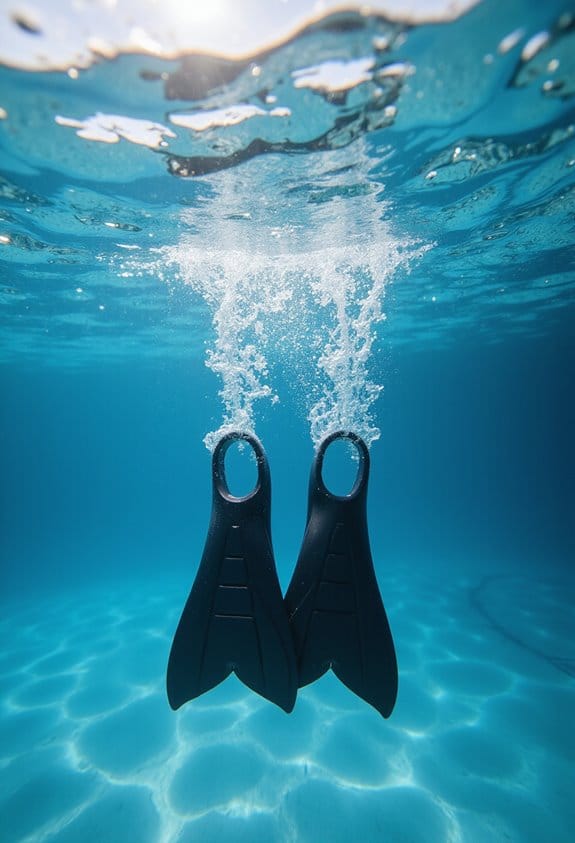
Building leg strength through resistance training is crucial for swimmers seeking to enhance their propulsion and overall performance in the water. Kickboard workouts effectively isolate the lower body, allowing for targeted muscle coordination through sustained kicking exercises. Adding resistance devices like fins amplifies the challenge, helping swimmers engage more muscle fibers while swimming. Many professional swim fins feature hydrodynamic designs that reduce drag and promote natural kicking motion, maximizing training efficiency. Dryland exercises, including squats and isometric training, contribute to strength recovery and joint stability—think of them as your legs’ gym buddies. Utilizing progressive overload in these routines guarantees consistent muscle development, essential for maintaining power in the water. Effective for improving leg strength while swimmers can enjoy enhanced kick strength, all while balancing fun and fitness, much like a dance party where every kick feels like a sweet victory!
Recommended Products

The open-back Powerskin Carbon Glide combines arena's revolutionary Carbon Fiber technology with new lightweight fabrics to create the ultimate World Aquatics (FINA) approved racing suit for women

The closed-back Powerskin Carbon Glide combines arena's revolutionary Carbon Fiber technology with new lightweight fabrics to create the ultimate World Aquatics (FINA) approved racing suit for women

The Powerskin Carbon Glide jammer combines arena's revolutionary Carbon Fiber technology with new lightweight fabrics to create the ultimate World Aquatics (FINA) approved racing suit for men
The Role of Ankle Flexibility in Performance
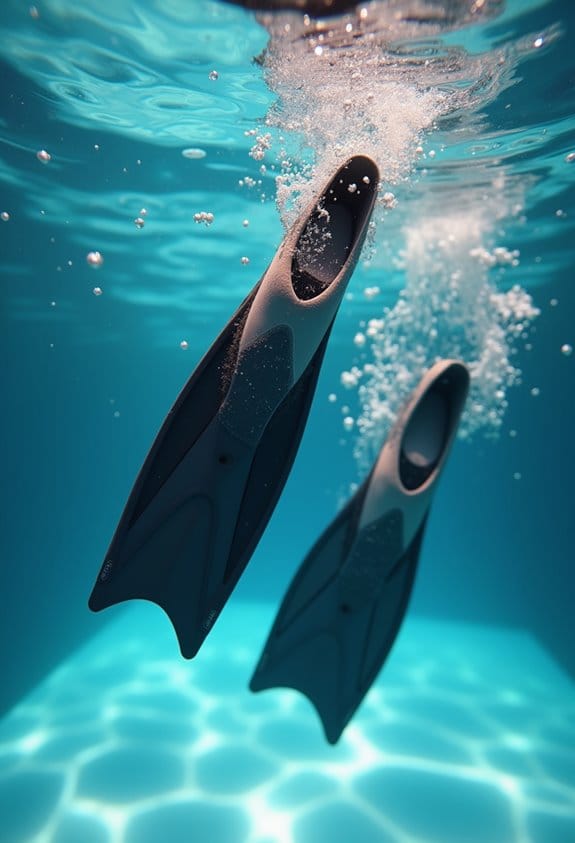
Ankle flexibility plays a vital role in maximizing swimming performance, often determining the difference between a record-setting swim and a mediocre time. Swimmers with greater ankle plantar flexion range of motion exhibit improved propulsion, which translates to faster kick velocities and enhanced overall speed. The ankle mobility benefits include the ability to effectively utilize the foot’s surface area, important during each kick. Additionally, flexibility training, such as targeted stretching, can greatly increase range of motion, leading to shorter flutter kick times. Using swim fins with appropriate blade design can further enhance ankle flexibility by promoting a natural kicking motion. Conversely, restrictions in ankle movement can force swimmers into inefficient compensatory patterns, slowing them down. Ultimately, improved ankle flexibility is not just an accessory; it’s an essential ingredient in the recipe for swimming success. Ankle mobility is a critical element for speed and athletic performance, so stretch those ankles!
Improved Swimming Technique With Fins
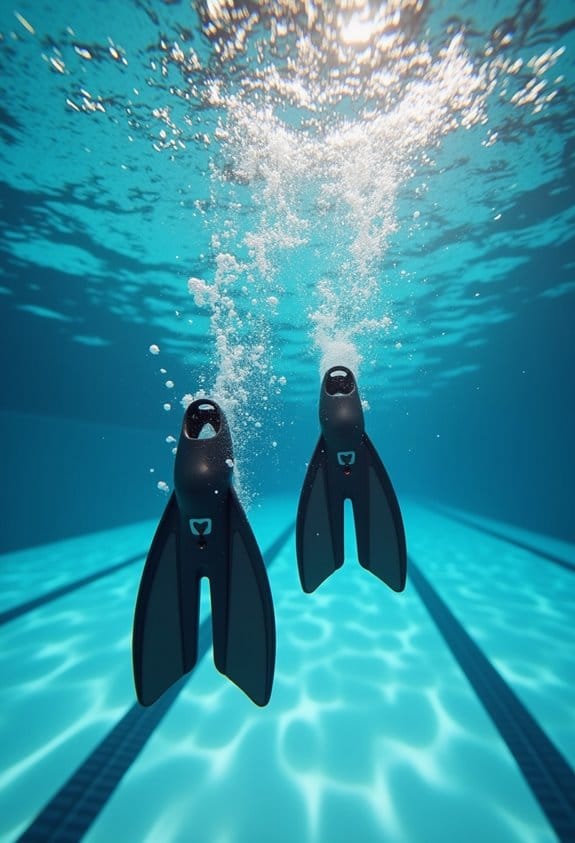
While achieving ideal ankle flexibility is fundamental to swimming faster, many swimmers may find themselves looking for additional tools to enhance their technique in the water. Fins promote a narrow, streamlined kick, eliminating those inefficient scissor kicks often seen in novice swimmers. They also provide increased water resistance, which helps swimmers refine their kick timing and improve stroke synchronization. This leads to a better feeling of propulsion during the upbeat phase of kicks, as swimmers engage their hamstrings and calves more effectively. With immediate feedback on foot positioning, swimmers can make adjustments on the fly, ultimately leading to improved stroke mechanics and speed. Furthermore, improved body position enables swimmers to maintain a higher body line, which is crucial for optimal performance. Many beginner-friendly fins feature short blade designs that encourage proper form and faster kicking. Think of fins as your training wheels for the water, meticulously guiding your technique to race-winning performance.
Recommended Products

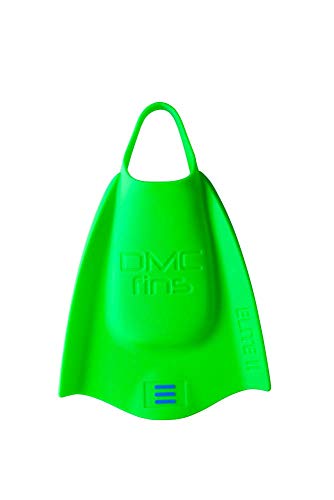
Adult Monofin: Enhance your butterfly kick with the FINIS Shooter monofin's short, stiff fiberglass blade; it's perfect for underwater drills and conditioning

Enhancing Body Position and Reducing Drag
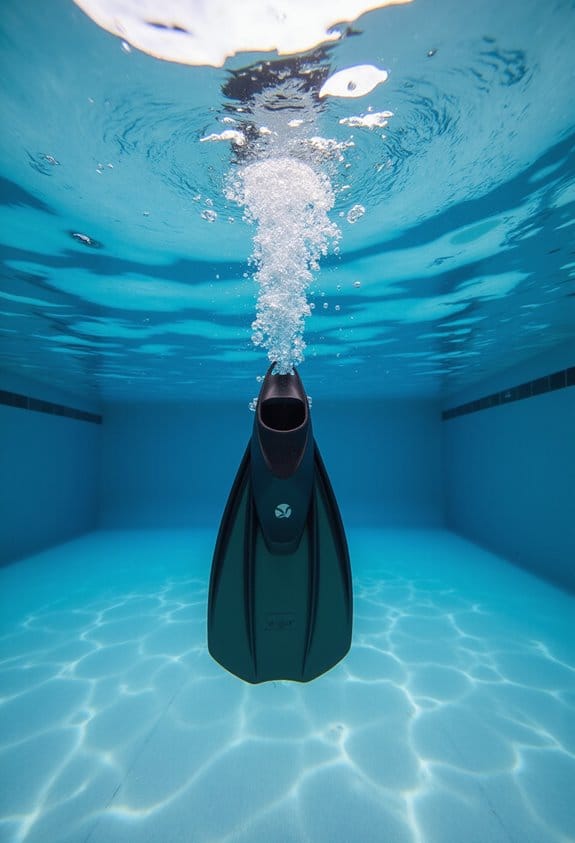
Fins transform a swimmer’s body position in the water, promoting an elegant, horizontal line that cuts through drag like a hot knife through butter. By encouraging better body alignment, fins help maintain a streamlined posture, essential for minimizing drag. As swimmers adopt this horizontal position, their legs and feet hover near the surface, preventing sinking that would otherwise increase resistance. With fins, leg movement becomes more efficient, enhancing kicking mechanics and reducing unnecessary turbulence. This streamlined form resembles a speedboat gliding over the water, allowing for greater propulsion with less effort. Additionally, choosing fins made of soft silicone materials can increase comfort, enabling longer training sessions. Overall, fins not only support effective body alignment but also greatly contribute to drag reduction, helping swimmers glide smoothly through the water like a well-oiled machine. Additionally, fins promote a narrower kicking motion, which further reduces drag and enhances hydrodynamic efficiency.
Boosting Endurance and Energy Efficiency
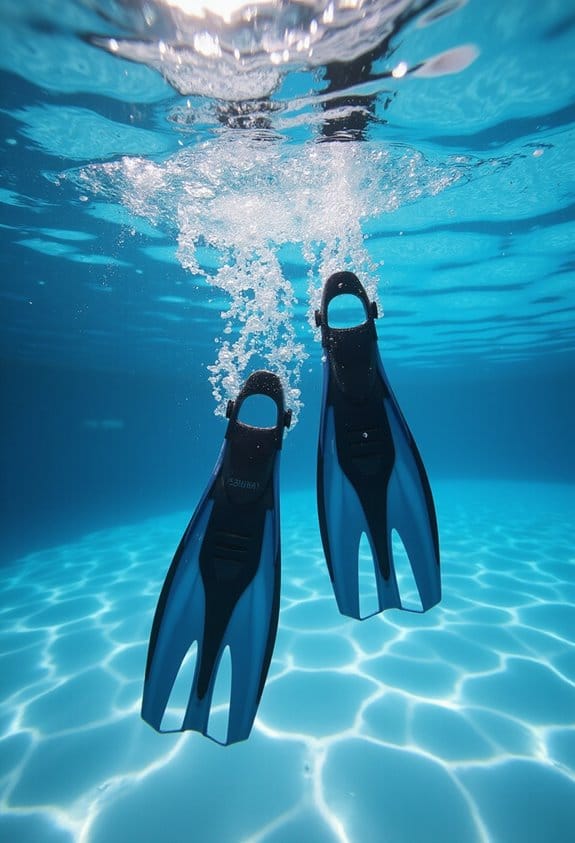
Boosting endurance and energy efficiency is a game changer for swimmers looking to maximize their performance in the water. By incorporating fins into training, swimmers can experience an increase in kick tempo and coordination, reducing muscle fatigue and enhancing their overall leg strength. These short-blade fins allow for greater thrust per kick, effectively elevating energy expenditure while improving muscular endurance. Additionally, short blade fins promote better ankle flexibility, enabling swimmers to catch more water and propel themselves with less effort. Many fins also feature lightweight materials like silicone or soft rubber, which contribute to comfort and reduce fatigue during prolonged use. This translates to longer training sessions without the dreaded burnout. Ultimately, integrating fins into swim workouts not only hones kicking technique but also transforms ordinary swim sessions into extraordinary endurance-building experiences, making it a win-win for serious swimmers.
Reducing Upper Body Strain During Training
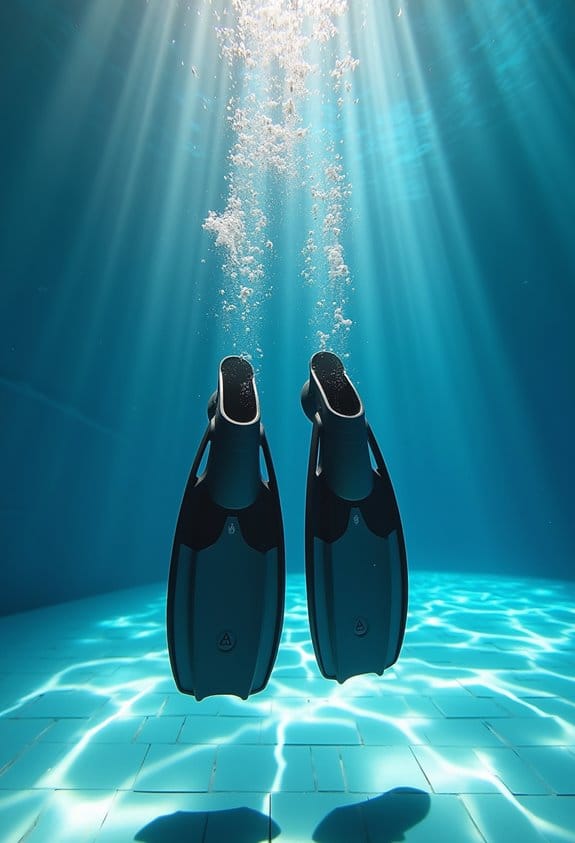
For many swimmers, the challenge of reducing upper body strain during training can feel like trying to swim upstream against a strong current. Fins provide an effective solution by enhancing propulsion while easing the load on shoulder mechanics. When incorporated into warm-ups, fins allow for a smoother shoulder recovery, letting swimmers gently shift into more demanding sets. By elevating the hips, fins help maintain a more streamlined position, reducing drag and alleviating unnecessary stress on the upper body. This balance allows competitive swimmers to focus on leg strength without overworking their shoulders, ultimately supporting injury prevention. With fins, the goal is clear: enabling longer, more efficient swims while keeping those shoulders happy and healthy. Incorporating fins into routine training is essential for increasing propulsion and maximizing the benefits of leg workouts. Additionally, choosing the right blade length can optimize kick efficiency and comfort during these sessions.
Performance and Speed Gains With Fin Training
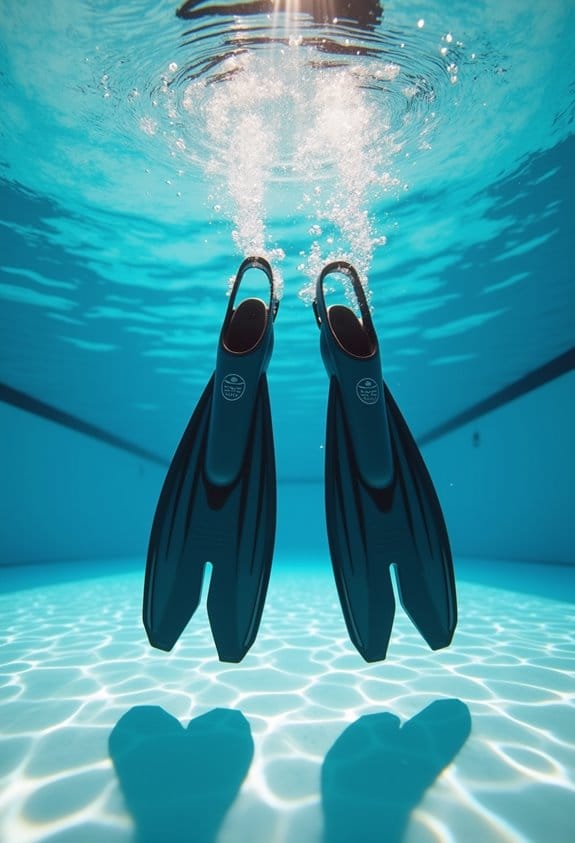
How can swimmers maximize their speed and performance without overexerting themselves? Utilizing fins proves to be an effective strategy, leading to significant propulsion improvement. Studies show that even small fins can increase the effective surface area of the feet by about 25%, resulting in enhanced swimming velocity and stroke efficiency. With proper fin duration in training, swimmers experience reduced kick rates, meaning they can sustain higher speeds with less energy. Additionally, fins encourage hip-driven kicking, improving technique and reducing drag. This combination not only enhances propulsion but also helps maintain a high body position in the water. Proper blade design in fins can further optimize these benefits by promoting faster kick rates and boosting propulsion. Ultimately, these elements contribute to measurable performance gains, making fin training a smart addition for serious swimmers seeking an edge. Furthermore, building leg strength with fins also leads to enhanced cardiovascular endurance over time, further improving overall swimming performance.
Recommended Products

Mermaid fin come with an exclusive mermaid fin bag, stylish and portable, easy to store and carry around.

FINA-Compliant Swim Gear: This affordable solution for backstroke wedge training is FINA-compliant and can be used during both training and competition

DUAL-MATERIAL CONSTRUCTION FOR PERFORMANCE - Crafted with two materials and over-molded side ribs, the Mares Avanti 4X Fins offer powerful thrust and lasting comfort; Perfect for divers seeking responsive, open-heel fins with advanced underwater performance
Developing Sprint Power and Explosive Leg Strength
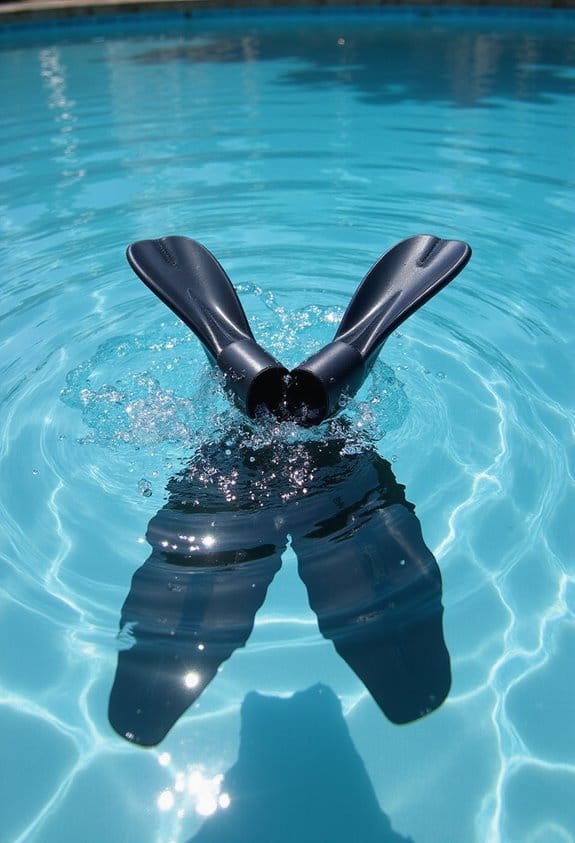
Developing sprint power and explosive leg strength forms the backbone of competitive swimming, where every millisecond counts. The use of fins enhances sprint mechanics by increasing resistance in kicking, forcing leg muscles such as hamstrings and glutes to engage more fully. This dynamic explosive training, akin to lifting weights while swimming, boosts muscle strength and power generation. Swimmers experience more rapid kick tempos, which leads to quicker muscle contractions, consequently improving neuromuscular coordination essential for sprint starts. With fins, ankle flexibility improves, allowing for better water push and enhanced kick frequency. The use of short training fins is particularly effective because their design promotes kick speed and leg strength without compromising technique. Ultimately, the result is a supercharged kick that feels like a turbo boost for anyone competing in the water, transforming leg power into a competitive edge—talk about splashing your way to victory!
Recommended Products

Based on one of the first vented rubber fins sold in North America and popular among military and professional divers. Compact, and ultra-rugged for use in harsh environments.

Ideal for tropical diving, snorkeling, or pool training, this 1.5mm Everflex men's thermal long-sleeve top is made with a high-stretch Everflex neoprene on the outside.
Ideal for tropical diving, snorkeling, or pool training, this 1.5mm Everflex men's thermal long-sleeve top is made with a high-stretch Everflex neoprene on the outside.
Integrating Fins Into a Balanced Training Regimen
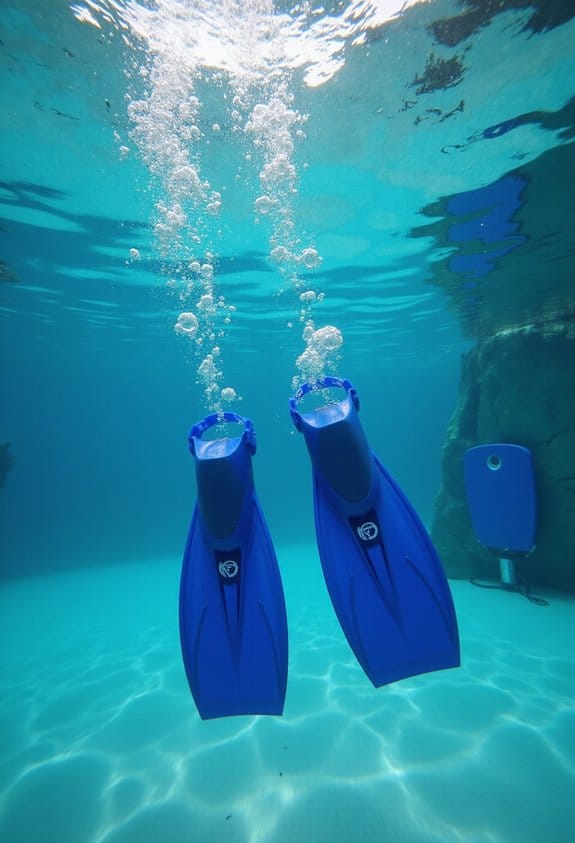
In crafting a balanced training regimen, integrating fins can be a game-changer for competitive swimmers looking to optimize their performance without sacrificing technique. Selecting the right fins is essential; swimmers should opt for those that enhance resistance while promoting flexibility. Choosing fins made from high-quality silicone or rubber ensures durability and comfort. Training frequency should include fin sessions judiciously—about two to three times a week—to build leg strength and endurance without causing dependency that may compromise natural stroke mechanics. Alternating fins with dryland exercises, like ankle-strengthening routines, guarantees a well-rounded approach. Think of fins as booster rockets for your legs. They amplify every kick, making swimmers feel superhuman—just don’t get too used to the extra thrust! Training with fins contributes to a more enjoyable and fun swim experience, allowing swimmers to engage more fully during their workouts. A balanced method using fins assures improvements while keeping technique sharp and effective.
Recommended Products

Speedo Biofuse technology – for maximum comfort and fit

Designed to perform in harmony with the body using BioFuse technology

This formidable scuba diving open heel fin utilizes patented 3 material injection molding process that consists of a comfortable foot pocket rubber that extends up the side rails of the blade.
Frequently Asked Questions
Can Beginners Use Fins Safely While Swimming?
Beginners can safely use fins to enhance their swimming experience. Fins benefits include improved leg strength and confidence in the water, but attention to fit, comfort, and technique is essential for maintaining beginner safety during training.
How Often Should Fins Be Incorporated Into Training?
Fins frequency in training should be balanced with other activities, using fins during specific sets while ensuring variety. This prevents dependency, supports muscle development, and allows swimmers to maintain proper technique and endurance over time.
Do Fins Help With Improving Stroke Technique for All Swim Styles?
Fins greatly enhance stroke technique across swim styles, improving stroke efficiency by 20%. They promote better fin technique, encouraging swimmers to develop a more hydrodynamic kick, essential for optimizing performance in competitive swimming environments.
What Types of Fins Are Best for Strength Training?
For strength training, athletes benefit from long rubber fins, maximizing resistance and muscle engagement. Short fins enhance technique while allowing moderate power. Additionally, integrating swim paddles can further develop upper body strength alongside fin use.
How Do Fins Affect Overall Swimming Performance Compared to Regular Training?
Fins elevate swimming performance analysis, seamlessly merging strength and speed. Their unique training adaptability fosters enhanced propulsion and technique, allowing swimmers to achieve faster times compared to traditional methods, as they develop essential leg endurance and efficiency.