As an Amazon Associate, we earn from qualifying purchases. Some links on this site are affiliate links at no extra cost to you. Our recommendations are based on thorough research and editorial judgment.


How Do Neoprene Caps Differ From Traditional Swimming Caps?

Neoprene caps offer a thicker, insulated option compared to traditional caps made from latex or silicone. With a thickness range of 2mm to 5mm, they excel in cold water, retaining heat and combating brain freeze—perfect for chilly triathlons! Prices range from $17 to $50, reflecting their durability. While neoprene feels snug, traditional caps provide more flexibility for pool swimmers. Ultimately, your choice depends on water temperature and swim type. More insights await!
Key Takeaways
- Neoprene caps provide better thermal insulation in cold water, while traditional caps excel in hydrodynamics for warmer pool conditions.
- Neoprene caps feature adjustable chin straps for a secure fit but may feel more constrictive compared to the stretchable latex and silicone options.
- Neoprene caps are more durable and resistant to chlorination, while traditional latex caps tend to degrade faster with frequent use.
- Neoprene caps are bulkier, accommodating longer hairstyles, whereas traditional caps prioritize a thinner profile for streamlined swimming.
- Pricing varies, with neoprene caps costing $17 to $50, while traditional caps are more budget-friendly, ranging from $3 to $15.
Material Composition and Thermal Properties
When comparing neoprene caps to traditional swimming caps, one of the most striking differences lies in their material composition and thermal properties. Neoprene, primarily synthetic rubber, provides significant neoprene benefits over latex or silicone. Typically ranging from 3mm to 4mm thick, these caps offer excellent thermal efficiency, particularly trapping warmth and reducing heat loss in water below 65°F (18°C). This thickness also minimizes the dreaded brain freeze that users often experience with thinner options. Additionally, neoprene’s resistance to saltwater corrosion and UV damage enhances longevity, making them a reliable choice for outdoor swimming. Neoprene caps tend to be bulkier in design compared to the sleek profiles of silicone or fabric caps. Moreover, the adjustable chin strap feature allows for a more personalized fit, further enhancing comfort during longer swims. While a bit bulkier, the insulation and comfort for prolonged swims in chilly conditions make neoprene caps a worthy investment for dedicated swimmers.
Fit and Comfort
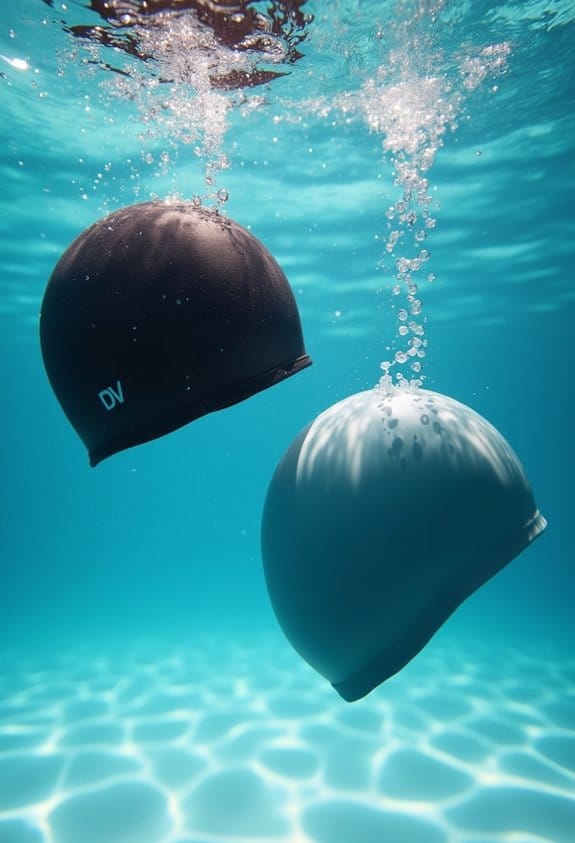
The comfort and fit of a swimming cap can greatly influence a swimmer’s performance and overall experience in the water. Neoprene caps provide a thicker and less elastic fit, offering decent fit flexibility with adjustable straps, perfect for open water challenges. However, their bulk can feel restrictive, especially for pool use. Notably, neoprene thickness typically ranges from 2.5mm to 3mm to optimize warmth without sacrificing mobility. On the other hand, traditional latex caps excel in stretchiness, easily accommodating various head shapes, while silicone caps blend comfort and insulation well without excessive weight. Ultimately, swimmers must consider their comfort levels — a snug neoprene might keep one warm in chilly waters, while a light latex cap could feel like wearing a gentle cloud. Choosing the right fit is essential to avoid disruptive slippage or discomfort, especially since the primary function of swim caps is to increase competitiveness in swimming.
Recommended Products

INTEGRATED PRECISION COMPASS: Features the largest, most accurate HD-stabilized compass in its class. The integrated reticle and illuminated direction display allow for precise navigation and distance estimation even in heavy swells and low-light conditions.

SUPERIOR BUOYANCY & FLEXIBILITY: Designed for women, strategically placed neoprene thickness enhances flotation without compromising movement, ensuring optimal positioning, comfort, and insulation in every stroke

IDEAL COMFORT: The XCEL Men's Axis Back Zip Full Wetsuit 4/3mm is constructed of Ultrastretch Neoprene with quick dry fibers, for ideal comfort
Usage and Performance
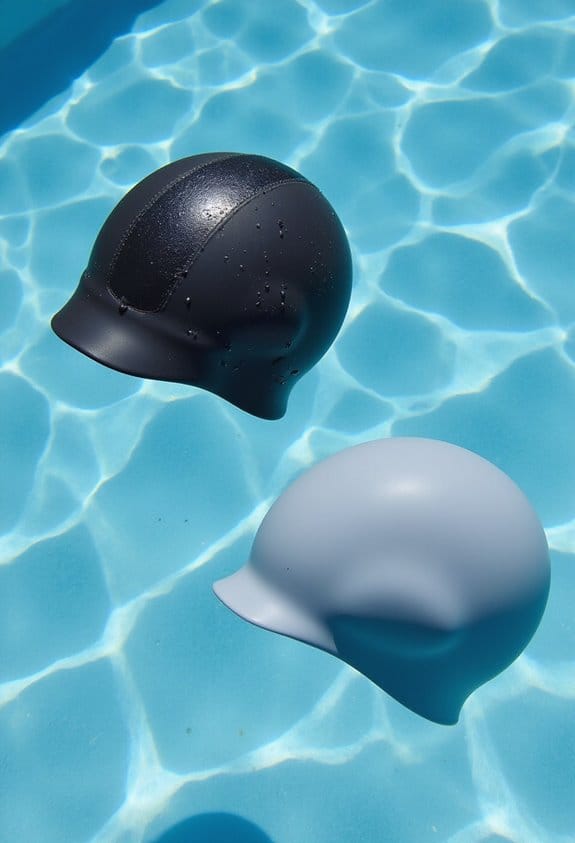
Handling the waters of swimming cap options, swimmers quickly discover that usage and performance are critical factors influencing their choice. Neoprene caps shine in performance contexts involving cold water, offering exceptional thermal insulation, making them ideal for disciplines such as triathlons and long-distance open water swims. Their extra-large design often accommodates long hairstyles, providing both warmth and comfort. While traditional silicone caps excel in hydrodynamics, allowing for faster swims in warm pools, neoprene caps can still streamline movement despite their extra thickness. Think of neoprene as your cozy winter jacket, keeping you warm but slightly bulkier, while silicone is your sleek, aerodynamic windbreaker. Swimmers sensitive to cold will appreciate the warmth of neoprene, especially in natural bodies of water. Choosing the right cap can feel like picking the perfect pair of shoes—comfort and function are key! Additionally, neoprene caps help regulate body temperature in colder waters, making them a popular choice among long-distance open water swimmers.
Recommended Products

SUPERIOR BUOYANCY & FLEXIBILITY: Designed for women, strategically placed neoprene thickness enhances flotation without compromising movement, ensuring optimal positioning, comfort, and insulation in every stroke


Generous 5.8-gallon / 22-liter capacity.
Durability and Maintenance
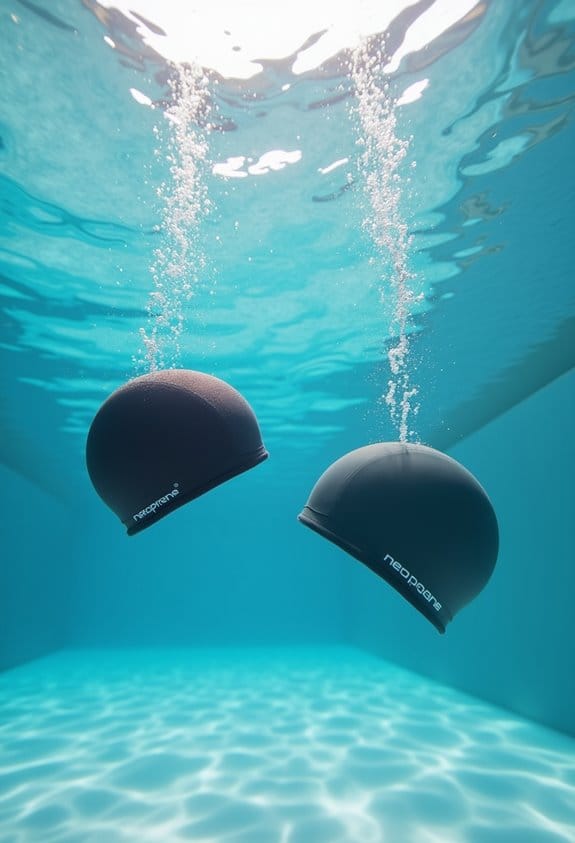
Choosing swim caps involves weighing options like durability and maintenance carefully, particularly for dedicated swimmers. Neoprene advantages shine through in their remarkable resilience. Made from synthetic rubber, these caps resist tearing and withstand harsh environments better than traditional latex caps, which face significant latex disadvantages. With frequent use, latex can degrade, losing elasticity and ripping under pressure. Neoprene’s thick structure enhances its lifespan, making it ideal for cold or open-water swimming. Neoprene caps provide insulation during swims, helping to keep swimmers warm in colder conditions. Though they require gentle cleaning with mild soap, neoprene caps tolerate harsher conditions better. Meanwhile, latex needs extra care—think of them as the diva of swim caps demanding pampering. Overall, for those seeking longevity, neoprene caps are a more durable, if slightly bulkier, swim companion. Their durability against chlorine also contributes to their extended usability compared to other materials.
Design and Additional Features
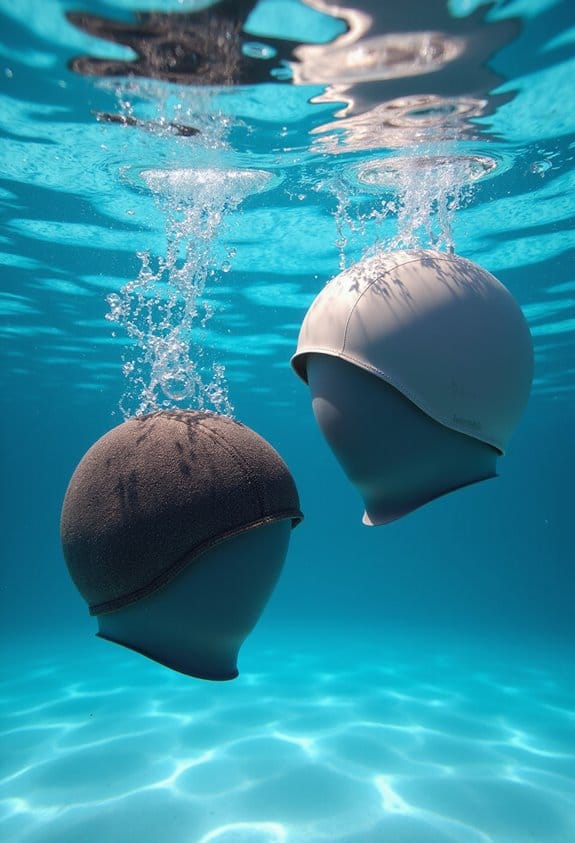
Swim cap design plays an essential role in enhancing performance and comfort in the water. Neoprene caps showcase impressive design flexibility with adjustable fasteners, allowing swimmers to customize their fit. This snug sealing minimizes water ingress and provides added warmth, a stark contrast to traditional caps that rely solely on elastic tension. Typically thicker, neoprene caps (2.5mm to 4mm) offer formidable thermal insulation, protecting against chilly open waters. Additionally, many neoprene designs incorporate high-visibility colors and reflective linings, keeping safety considerations front and center. While traditional caps may keep hair dry, neoprene covers everything from forehead to neck. Consequently, anyone looking to swim in the chilly outdoors might just feel like they’re getting a warm hug instead of a simple cap! Moreover, these caps are made from premium 4mm Yamamoto Smoothskin material, which enhances comfort and warmth during swimming. Unlike neoprene, silicone swim caps are designed primarily for reducing drag and protecting hair from chlorine rather than thermal insulation.
Price and Availability
Price varies considerably between neoprene caps and their traditional counterparts, reflecting the unique benefits each type offers. Neoprene caps are typically priced from $17 to $50, aligning with their durable construction and thermal properties. In contrast, traditional caps—made from latex or silicone—range from just $3 to $15, making them the budget-conscious swimmer’s best friend. However, one might face availability challenges, as neoprene caps are mainly found in specialty stores tailored to triathletes and open water swimmers, while traditional caps enjoy a broad presence in retail shops and online marketplaces. Price fluctuations based on brand and material quality further complicate the landscape. Watches with high water resistance ratings often have a similar price variability due to their enhanced features and durability. Ultimately, selecting the right cap often merges performance needs with affordability, much like choosing between designer shoes and comfy sneakers. Especially for those swimming in colder conditions, cold water swimming hats can significantly enhance thermal protection and comfort during swims.
Recommended Products

These boots are deigned to be used with open heel fins

Sleek and warm quilted jacket for men and women

3mm warming neoprene
Advantages of Neoprene Caps
For many swimmers, neoprene caps are not just a trendy accessory but a gateway to enhanced performance in cold water. These caps offer excellent cold water protection by providing superior thermal benefits, with thicknesses ranging from 2mm to 5mm ensuring a favorable balance between warmth and flexibility. Swimmers can experience a temperature increase of up to 3 degrees Celsius, enhancing endurance. The snug fit minimizes water ingress, keeping ears and scalp drier, while adjustable chin straps cater to diverse head sizes. Although they might be a bit bulkier than traditional options, neoprene’s durability means these caps withstand multiple uses better than latex. Plus, who wouldn’t want to swim comfortably without the chill of an ice bath? Additionally, neoprene caps help prevent significant heat loss from the head during those bracing swims.
Advantages of Traditional Caps
While neoprene caps deliver thermal benefits, traditional swim caps hold their own with a suite of advantages that swimmers continue to appreciate. Primarily, these caps enhance drag reduction by providing a smooth surface over the hair, markedly minimizing water resistance. This design helps competitive swimmers shave precious seconds off their times, as even slight reductions in drag can make a big difference. Additionally, they offer excellent hair protection, shielding locks from chlorine damage and tangles caused by water currents. A traditional cap fits snugly, keeping hair secure and the swimmer focused, much like a headband during a workout. Many traditional caps are made from silicone materials that are non-toxic and allergy-free, providing comfort for long swims. With various materials available—like silicone and latex—swimmers can choose their ideal cap for comfort and performance. Furthermore, they also help in promoting hygiene by acting as a barrier against bacteria in the water.
Best Practices for Care and Maintenance
Neglecting the care of neoprene swim caps can lead to premature wear and reduced performance, much like ignoring the regular oil change on a high-performance car. Proper cleaning techniques are essential; rinse the cap thoroughly with cold fresh water right after use to remove salt and chlorine. For stubborn dirt, gently rub the affected areas. Once rinsed, gently shake off excess water without twisting, then dry the cap by hanging it or laying it flat in a shaded area. It is also important to avoid prolonged exposure to direct sunlight, which can degrade the material integrity of neoprene over time. Storage tips include keeping it in a cool, dry place in a soft pouch, avoiding direct sunlight and sharp objects. Following these best practices not only extends the cap’s lifespan but also maintains its performance, keeping swimmers stylish and effective in the water. Remember, rinsing with cold water is crucial to combat saltwater and chlorine damage on neoprene items.
Recommendations for Cold Water Swimming
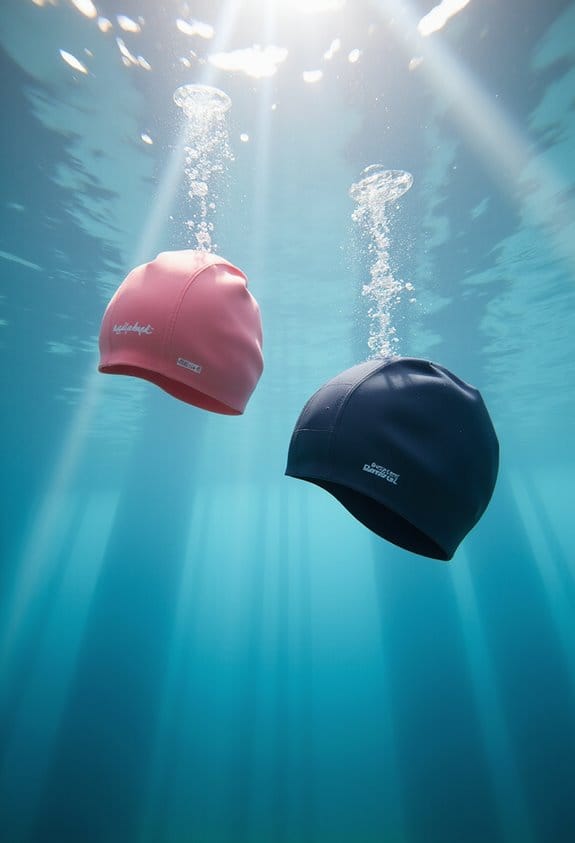
Cold water swimming presents an exhilarating yet challenging experience that calls for careful planning and preparation. To guarantee safety, swimmers should prioritize gradual entry into the water to mitigate cold shock response. Aiming for cold adaptation, they can build tolerance through frequent, controlled exposure, which reduces discomfort over time. Limit immersion to avoid hypothermia—10 to 15 minutes is a good benchmark in chilling waters. Wearing protective gear such as neoprene swim caps helps retain body heat and protect against cold water exposure. Cold-water swimming can also relieve stress; always keep warm clothing and towels nearby for quick heat recovery. Safety precautions are paramount; those with cardiovascular concerns must seek medical clearance before starting on a cold swimming journey. With the right mindset and protective gear like neoprene caps, swimmers can navigate these icy waters with confidence and comfort.
Recommended Products

BUILT IN ARCH SUPPORT - Comes with built in arch support and a heel cup. The arch keeps the foot in a natural position which applies more power to your kicks and comfort when you're on land. The heel cup supports natural padding in your heel to absorb shock when walking.

VISIBILITY AND SAFETY - The high-visibility color allow you to make yourself visible even at a great distance, keeping you safe during your open water swimming sessions.

Highly functional cap offers extra insulation for surfing, paddling, diving, and swimming
Choosing the Right Cap for Your Needs
Choosing the right swimming cap can feel like steering through a maze of options, especially after braving those chilly waters. Swimmers must weigh the neoprene benefits, particularly its thermal insulation, against the performance of cap materials like latex and silicone. Neoprene caps, ideal for cold conditions, offer excellent durability but can be bulkier, potentially affecting speed. In contrast, latex caps fit snugly and minimize drag, while silicone options slide on easily, making them kinder to long hair. Many swimmers prefer silicone caps for their ergonomic designs that reduce scalp compression and increase comfort. For temperatures above 80°F, stick with thinner materials to avoid overheating. Additionally, neoprene caps can help retain body heat during long outdoor swims, allowing swimmers to stay warmer as they navigate their aquatic challenges. As with pizza toppings, combining various caps—think neoprene with a sleek silicone underneath—could yield the perfect blend of warmth, fit, and performance suited to specific swimming needs.
Recommended Products

REDUCED WATER RETENTION - Designed with a patented ERGO-shaped footbed and outsole that follow the natural contours of your foot, the Aqualung Superzip Dive Boots for men and women deliver superior comfort, stability, and support while preventing excess water retention during extended dives

NEOPRENE BOOTS FOR MEN & WOMEN - The Mares Classic 3mm high top dive boots are designed to maximize diving comfort; Whether you're snorkeling or exploring deeper waters, these rugged yet comfortable scuba boots provide you with reliable support and performance for countless diving adventures to come

Low profile cap offers extra insulation for surfing, paddling, diving, and swimming
Frequently Asked Questions
Can Neoprene Caps Be Used for Indoor Swimming?
Neoprene caps can be used for indoor swimming, particularly for individuals with specific thermal needs. However, such caps may not align with typical swimming preferences due to increased drag and reduced comfort over prolonged periods.
How Do I Clean a Neoprene Swim Cap?
Cleaning a neoprene swim cap requires gentle methods, such as rinsing immediately after use and hand washing with neoprene-friendly cleaner. Maintenance tips include air drying away from heat and inspecting for wear to confirm longevity.
Are Neoprene Caps Eco-Friendly?
Neoprene caps are generally not considered eco-friendly due to their synthetic nature and sustainability concerns. Alternative swim caps made from eco-friendly materials, like natural rubber or recycled components, offer more sustainable options for environmentally-conscious consumers.
What Are the Weight Differences Between Neoprene and Traditional Caps?
In the race between neoprene and traditional caps, weight comparison reveals a significant disparity; neoprene’s material density makes it three to seven times heavier, offering warmth, while traditional caps celebrate lightness, favoring speed and agility.
Can Neoprene Caps Cause Overheating in Warmer Waters?
Neoprene caps can cause overheating in warmer waters due to their insulation properties. Increased water temperature effects lead to trapped heat, diminishing comfort and potentially leading to fatigue during prolonged use in such environments.


